
INCONGRU MAGAZINE
Essay
The Human and The Other
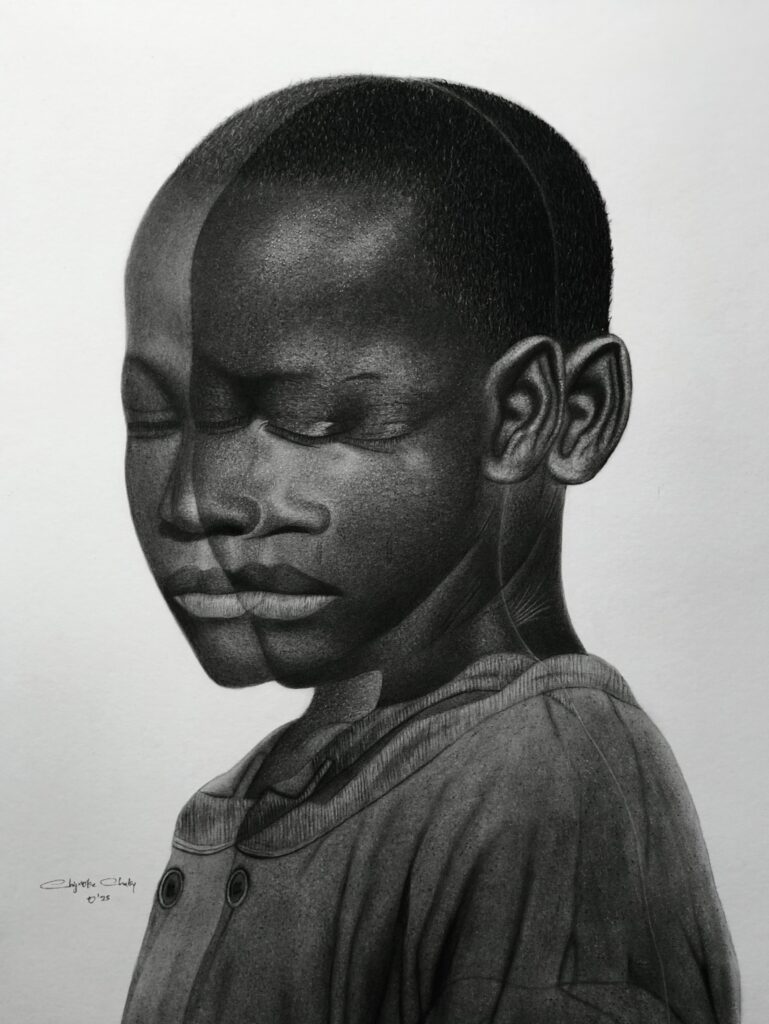
Racism, at its core, traces its roots to beliefs such as race essentialism. Race essentialism—the idea that races possess inherent, fixed traits—is often used as a tool of modern-day racism.
Empirical research indicates that these beliefs are associated with stronger racial bias. A recent study demonstrates that racial essentialism is linked to stronger racial bias and rigid categorization of people (Ho, Roberts, & Gelman, 2015).
Further studies likewise show that individuals with high racial essentialism are more likely to stereotype others and view race as fixed and determinative of behavior.
It is, however, perplexing that this logic is unevenly distributed across social hierarchies. In certain cases, identity markers assume a defining role. This is evident when a marginalized individual commits a crime.
For example, when a member of a marginalized group commits an offense, the essentialist approach used to interpret their actions is tied directly to their group identity.
In such cases, identity overextends its role, functioning as a lens through which not only the individual’s behavior is interpreted, but also that of the entire marginalized group. The central concern, however, is that this same logic is not applied to members of dominant groups.
For instance, when a dominant-group individual commits a crime, an essentialist approach is seldom used to interpret their actions. Instead, a more individualized explanation is adopted.
If a dominant-group individual steals, it is because they are an unprincipled actor. When a marginalized individual steals, however, the act is often interpreted as being inherently tied to their group.
The issue with this approach is that, in the dominant-group individual’s case, a humanistic and individualized interpretation is applied—one that acknowledges that anyone can be flawed. Their identity is not used as a lens through which all other members of their group are judged.
In this sense, they are human first before their group identity, and that identity is treated as irrelevant to their character.
In contrast, the marginalized individual is categorized by group identity before they are human, and that identity is taken as the defining explanation for who they are.
This raises the question of what causes such disparity. I argue that it can be understood through what I define as the concept of:
Human Fluidity Privilege
Human Fluidity Privilege describes a structural asymmetry in social perception whereby members of dominant groups are granted the latitude to embody multiple, even contradictory, identities—such as being moral or flawed, exceptional or ordinary—without these traits being generalized to their group.
In contrast, marginalized individuals are frequently denied this fluidity, as their actions and identities are interpreted through rigid, pre-existing stereotypes, effectively fixing them into static social categories and restricting the full recognition of their humanity.
I argue that this concept explains the disparity in social perception even within essentialist belief systems. Given that such disparity exists, it becomes evident that there are identifiable beneficiaries—namely, those whose identities are not reduced to singular interpretations.
This suggests that race essentialism produces structural bias that disproportionately targets marginalized groups, reinforcing its role as a tool of modern-day dominance.
When one group is afforded the ability to embody multiple identities and fully exercise their humanity while another is denied that same opportunity, it becomes evident why hierarchy persists.
This leads to one fundamental question: Who is human, and who is the other?
“The Human and the Other”
Having established the above, it can be argued that these beliefs create exclusionary structures in the recognition and exercise of humanity. This manifests in such a way that the privilege of human fluidity is afforded to only a few, while others are confined to fixed identities.
Consequently, these structures produce a stark disparity in social perception and, more importantly, result in dehumanization.
If only one group is afforded the privileges of humanity—such as individuality and the freedom to embody multiple identities—where, then, does that leave everyone else?
Human Fluidity Privilege operates in such a way that dominant groups are perceived as the default humans and are therefore granted neutrality, while marginalized counterparts are viewed primarily through the lens of static categorization.
This creates a system of fluidity versus fixity, where members of dominant groups are seen as deserving of the latitude to embody various identities, whereas marginalized individuals are positioned within fixed, pre-existing stereotypes that are continually reinforced through essentialist frameworks.
Given that studies demonstrate that essentialist beliefs are associated with bias and rigid categorization of people (Ho, Roberts, & Gelman, 2015), alongside inconsistencies in how traits are attributed within such belief systems, this effectively produces a process of othering in society.
This othering manifests in the monopolization of human fluidity by dominant groups and is sustained through the dehumanization of those positioned outside this privilege. Thus, society becomes divided into two categories: the human and “the other.”
This disparity extends beyond isolated cases and manifests in broader social contexts. For instance, documented accounts show that marginalized legal professionals are sometimes mistaken for defendants in courtrooms (Wilson, 2020).
This reflects the earlier claim that marginalized individuals are often viewed through the lens of group identity, with individual actions generalized across the whole group—an approach that stands in sharp contrast to how their dominant counterparts are perceived.
These consequences extend beyond perception and into tangible injustices. Studies have shown that bias can influence how evidence is interpreted in courtrooms (Sommers & Ellsworth, 2000), demonstrating that such biases do not merely shape opinion but actively affect legal outcomes.
In this way, the administration of justice itself can become distorted.
Perhaps more concerning, however, is the extent to which these belief systems serve to justify exclusionary practices. Research indicates that individuals who hold essentialist beliefs are more likely to accept social hierarchies as natural and to endorse stereotypes (Bastian & Haslam, 2006).
It is therefore unsurprising that such patterns contribute to the persistence of deep social divisions sustained by othering and exclusion.
If structural hierarchy ultimately depends upon denying some people the full latitude of humanity while reserving that humanity for others, then its deepest operation is not merely prejudice but the unequal recognition of personhood.
To this end, one question persists: who is human and who is made to be the other?
Cover artwork: Clarity of Mind II by Chijioke Anekwe.