INCONGRU MAGAZINE
Essay
OPPRESSIVE DOMINANCE DYNMAICS
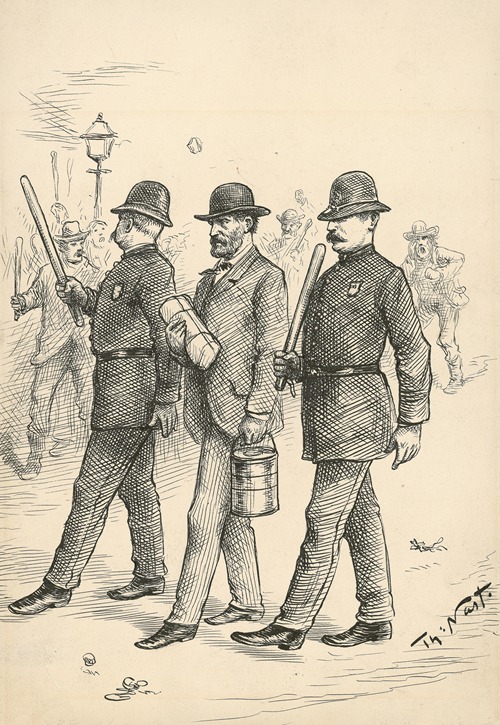
The need for superiority, even when unearned, is one of the most enduring human impulses. It is therefore unsurprising that racial hierarchy continues to structure social life. That superiority can be claimed by reason of race — a mundane human variation — helps explain why conquest persists. If superiority required sustained labor or distinction, rather than convenience, racism might have been short-lived. Instead, guaranteed superiority — particularly on the basis of skin — continues to beguile even modern societies. Racism has therefore learned to adapt, reproducing itself even under conditions of apparent progress or equality.
The adaptive logic through which racism persists is what I call Oppressive Dominance Dynamics (ODD).
Oppressive Dominance Dynamics (ODD) is a theoretical framework for understanding how systems of prejudice, hierarchy, and social domination persist, adapt, and reproduce themselves under conditions of apparent progress or equality. ODD operates through three interrelated mechanisms: Compensatory–Derivative Superiority (CDS), which explains the psychological orientation toward hierarchy; Rotational Hierarchy Syndrome (RHS), which describes how dominance is socially enacted; and Privilege Preservation Panic (PPP), which emerges when hierarchy feels threatened. Together, these dynamics illuminate why oppression does not simply disappear with progress, but reorganizes itself.
Compensatory–Derivative Superiority (CDS)
Compensatory–Derivative Superiority (CDS) describes a hierarchical orientation in which individuals derive entitlement, worth, or superiority from unearned identity traits — such as race, nationality, beauty, gender, or social belonging — rather than, or in addition to, earned
achievement or substantive contribution. At its core, CDS is not defined by the absence of achievement, but by dependence on unearned identity as a legitimizing force within hierarchy. Ordinary human traits are transformed into evaluative assets, positioning certain identities as naturally elevated.
CDS appears in two primary forms.
Compensatory CDS emerges when individuals lacking meaningful achievement rely on unearned traits as a substitute for accomplishment. In this form, identity becomes a shield against perceived inadequacy. A man with no social or economic power may still find assurance in racial or national superiority; a woman excluded from prestige may cling to beauty or proximity to whiteness. This is the most visible and brittle expression of CDS — loud, defensive, and easily threatened — because the superiority it rests on has no internal anchor.
Consider, for instance, the resentment often expressed by individuals who have not materially advanced yet speak with certainty about who deserves less. Their confidence does not arise from contribution, but from comparison. If they cannot rise, they must still remain above someone.
Derivative CDS, by contrast, appears when individuals possess achievement or status, yet continue to rely on unearned identity to naturalize, elevate, or legitimate that success. Here, identity does not replace achievement; it frames it. Success is presumed to be deserved before it is examined, while failure is excused as anomaly rather than evidence. A white professional’s advancement is read as merit; a marginalized person’s is read as exception.
Derivative CDS is quieter, institutional, and frequently mistaken for neutrality or meritocracy.
A university, for example, may insist it selects “the best,” while consistently reproducing the same demographic profile. Achievement is not fabricated — but the conditions that render it legible are uneven. Identity quietly does the work that evaluation claims not to do.
In both forms, CDS sustains the same structure: dignity is not equal, but distributed.
Rotational Hierarchy Syndrome (RHS)
Rotational Hierarchy Syndrome (RHS) describes the social process through which hostility and exclusion are rotated among marginalized groups in order to preserve hierarchy rather than dismantle it. When overt discrimination against one group becomes socially unacceptable, dominance does not retreat; it redirects.
RHS explains why progress often feels real while hierarchy remains intact. Targets shift, language softens, and new villains emerge — yet the underlying structure holds. The bottom rotates; the peak does not. Dominant identity remains the unspoken evaluative standard.
An illustrative example can be seen in moments when racial hostility gives way to xenophobia, or when sexism momentarily recedes only for Gender non-conforming identities to be newly scrutinized. Each shift is framed as moral concern, common sense, or social stability. What changes is not the logic of exclusion, but its object.
RHS also recruits marginalized people into enforcing hierarchy by offering comparative relief: you may not be at the top, but at least you are not them. Participation in prejudice can therefore feel temporarily empowering, even as it reinforces dominance.
Privilege Preservation Panic (PPP)
Privilege Preservation Panic (PPP) is a fear-driven response that emerges when historically advantaged groups perceive their unearned advantages to be eroding. Unlike CDS and
RHS, PPP is reactive rather than constant. It surfaces when dominance is no longer secure.
PPP is often expressed through moral panic, nostalgia for tradition, demographic anxiety, and re-exclusion of previously ordinary traits such as citizenship or cultural belonging. Because privilege is frequently mistaken for normalcy, its loss is experienced as injustice rather than correction.
One sees PPP in moments of social expansion — when access broadens, representation shifts, or historical narratives are questioned. What follows is not always open hostility, but a sudden insistence on rules, standards, and boundaries that had previously gone unspoken.
PPP emerges when compensatory and rotational strategies no longer feel sufficient.
Together, CDS, RHS, and PPP reveal that oppression survives not through stagnation, but through flexibility. Hierarchy adapts. It learns when to shout, when to disguise itself, and when to panic.
The need for superiority, even when unearned, remains one of humanity’s most destructive impulses.
Chidinma Ezenwa is a Nigerian law student, writer, and the founder and editor-in-chief of Incongru magazine. Her writing and editorial work explore identity, race, culture, and the structural forces shaping human agency and belonging. Beyond Incongru, she leads Ambiwoman, a women-centric initiative dedicated to expanding opportunities for young women. Through her practice, she is committed to creating spaces that question conventional assumptions and foster more complex, nuanced ways of seeing the world.